Blogs
The Importance of a Roof Deck and Why It Matters in New England’s Climate
- The roof deck is the structural foundation of your entire roofing system
- Massachusetts weather places extreme stress on roof decking
- Heavy snow, ice dams, and freeze-thaw cycles accelerate deck deterioration
- Moisture and poor ventilation can lead to mold and rot
- Compromised decking can void roofing warranties
- Replacing damaged decking prevents costly structural repairs
- A solid roof deck improves long-term performance and energy efficiency
Massachusetts Climate Puts Unique Stress on Roof Decking
New England’s climate creates significant structural challenges for roofing systems. From heavy snow accumulation to humid summers, Massachusetts homes experience year-round conditions that test the strength of roof decking.
Heavy Snow Loads
Massachusetts averages 40–60 inches of snow annually. Snow adds prolonged weight and moisture exposure, increasing the risk of sagging and structural fatigue in weakened decking.
Ice Dams and Freeze-Thaw Cycles
Ice dams form when attic heat melts snow that refreezes at roof edges. This forces water beneath shingles and into decking. Repeated freeze-thaw cycles cause expansion, delamination, and long-term rot. Read our article on Preventing Ice Dams this Winter in Massachusetts
High Humidity and Coastal Moisture
Summers often bring humidity levels above 70%. Without proper attic ventilation, moisture can warp sheathing, promote mold growth, and weaken structural integrity over time.
What Is a Roof Deck and Why Is It So Important?
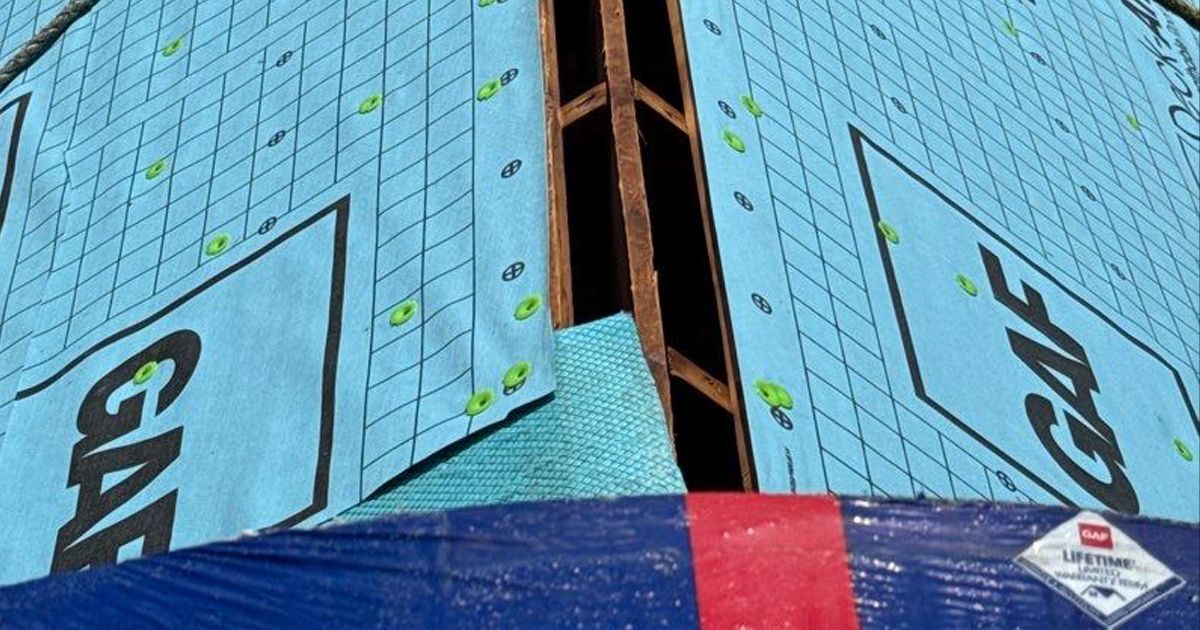
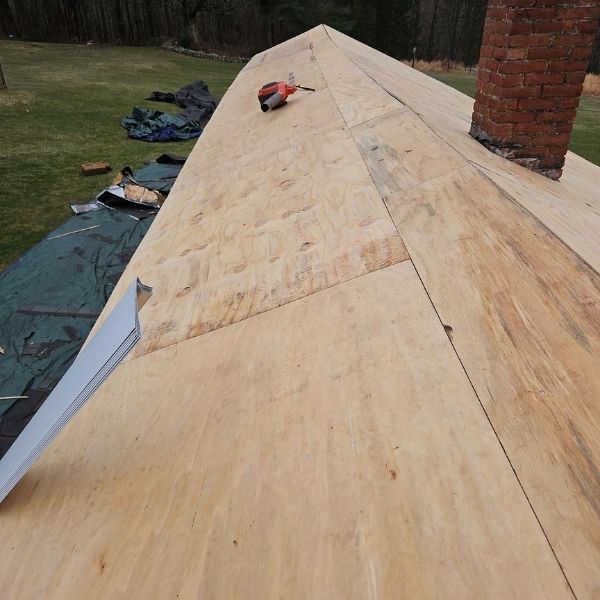
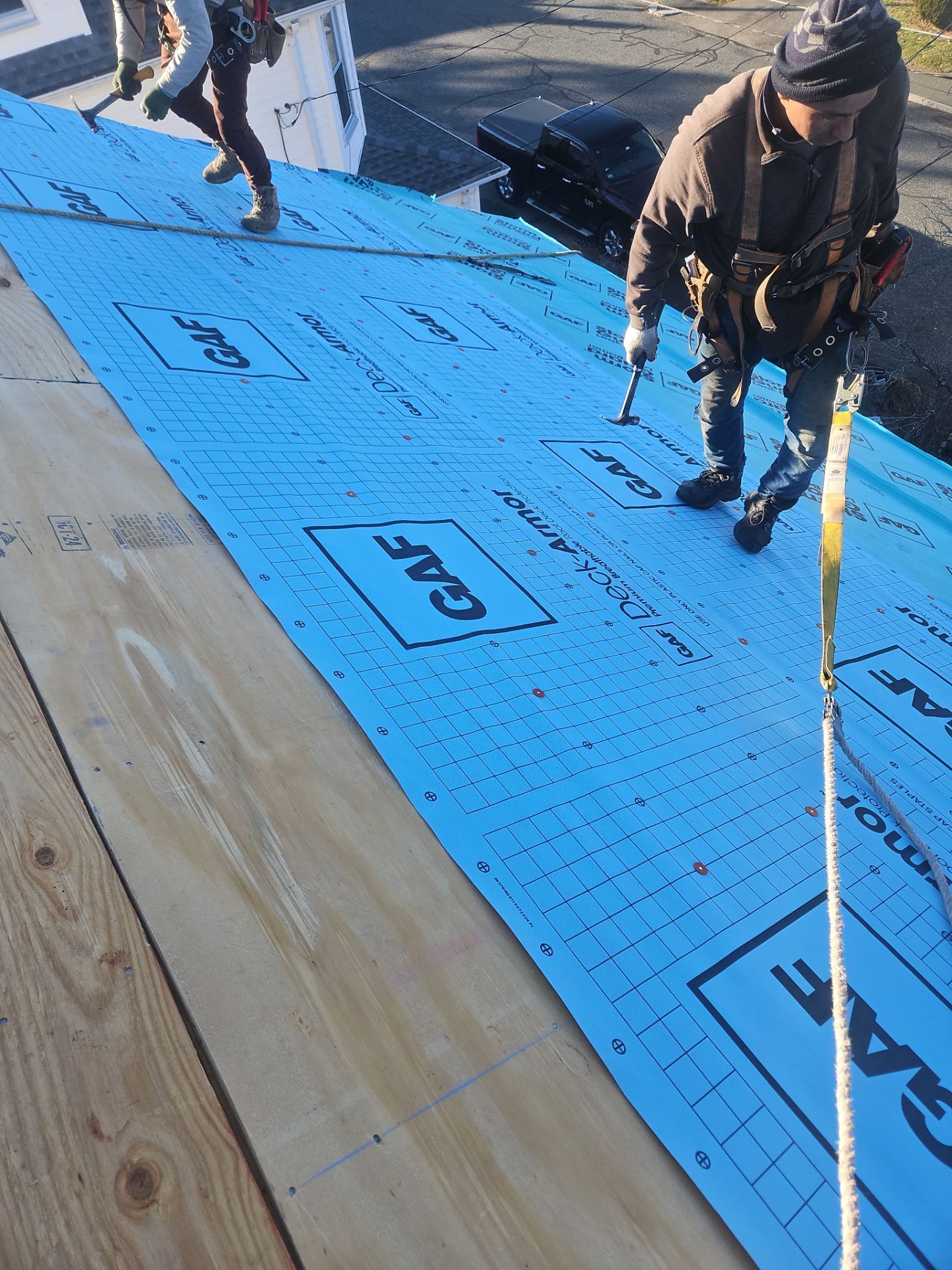
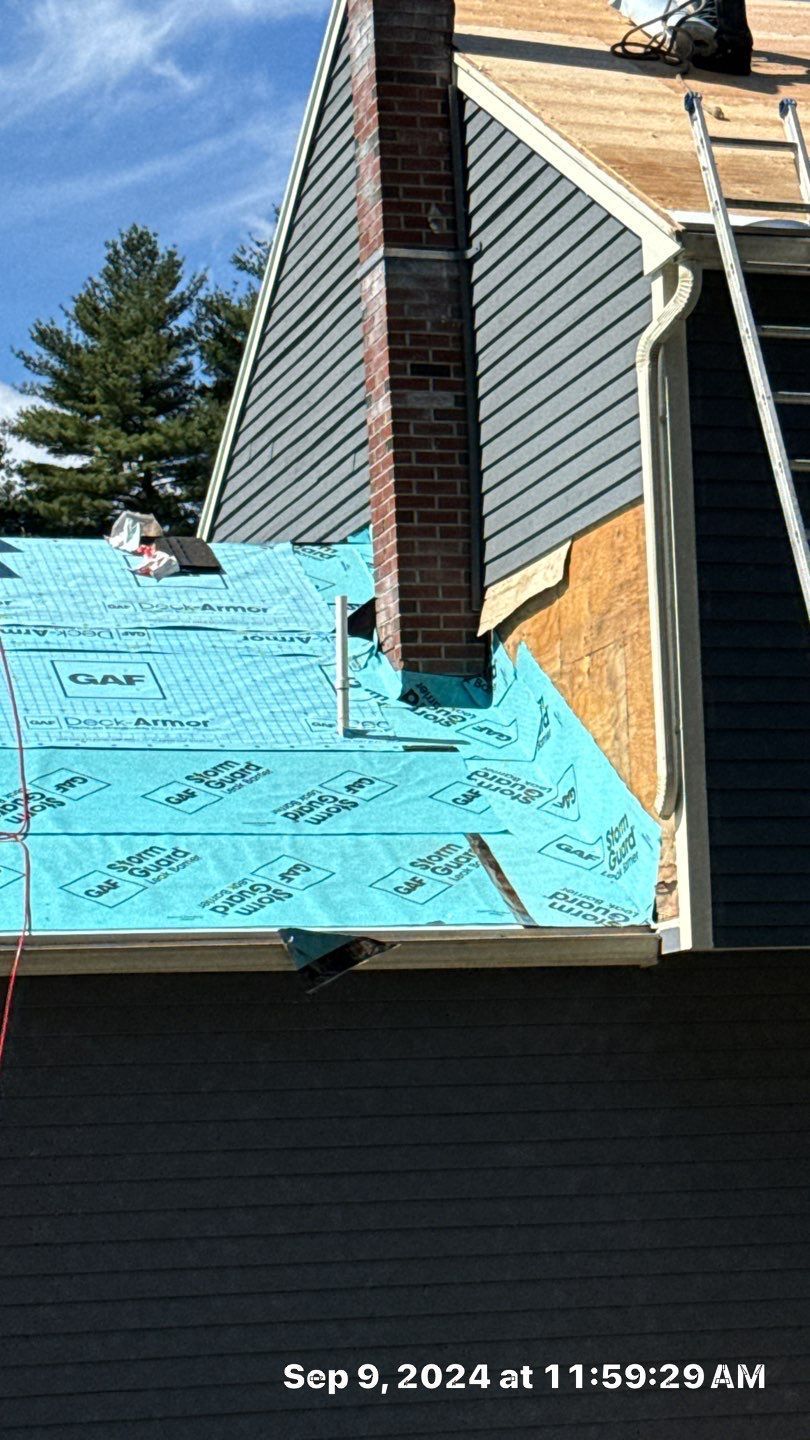
The roof deck-also known as roof sheathing-is the wooden surface attached to rafters or trusses. It provides the foundation for underlayment and shingles and distributes structural loads across the roof system.
Structural Foundation of the Roofing System
The deck provides rigidity, distributes snow loads, and creates a flat installation surface. Weak decking leads to premature shingle failure and safety concerns.
Anchor Point for Roofing Materials
Shingles are nailed directly into the decking. Compromised wood reduces nail-holding strength and increases blow-off risk during nor’easters and high winds.
Warning Signs of Roof Deck Problems
Homeowners rarely see roof deck damage until shingles are removed. However, certain warning signs may indicate underlying structural issues.
Sagging Roof Lines
Visible dips or uneven areas may signal structural weakening caused by moisture intrusion or prolonged snow load stress.
Soft or Spongy Areas
Soft spots detected during inspection indicate water damage and reduced structural integrity.
Interior Water Stains
Ceiling discoloration, peeling paint, or attic dampness often signal long-term moisture exposure affecting decking.
Ice Dams and Winter Leakage
Large icicles, thick ice ridges along roof edges, and winter leaks may indicate water backup beneath shingles, leading to deck rot and mold growth.
Mold or Mildew in the Attic
Dark staining, musty odors, and high attic humidity suggest ongoing moisture exposure damaging the roof deck from inside the home.
Why Roof Deck Integrity Matters During Roof Replacement
Building codes require structurally sound decking before installing new roofing materials. Addressing deficiencies ensures long-term performance.
Prevents Future Structural Damage
Installing shingles over damaged decking traps moisture and accelerates deterioration. Proper replacement prevents costly repairs.
Ensures Code Compliance
Massachusetts codes require solid, properly thickened sheathing to meet structural standards and manufacturer requirements.
Protects Manufacturer Warranty
Shingle warranties require proper fastening into structurally sound decking. Weak decking can void coverage.
The Role of Ventilation in Protecting Roof Decking
Balanced attic ventilation is essential to prevent moisture buildup and ice dam formation.
Reduces Moisture Buildup
Proper intake and exhaust ventilation prevent condensation and reduce mold growth.
Minimizes Ice Dam Formation
Consistent attic temperatures reduce uneven snow melt and prevent water backup at roof edges.
Statistics: Why Roof Decking Matters in New England
- Massachusetts averages over 50 inches of snow per year
- Ice dams contribute to thousands of winter insurance claims across the Northeast annually
- Poor attic ventilation can increase roof deck moisture content by more than 20%
- Homes over 20 years old commonly require partial deck replacement during roof installation
FAQs About Roof Decking in Massachusetts
How do I know if my roof deck needs replacement?
Most damage is discovered when shingles are removed. Signs include sagging, recurring leaks, and attic mold.
Is replacing roof decking expensive?
Costs vary depending on the extent of damage. Small sections are common and manageable.
Can new shingles be installed over damaged decking?
No. This risks structural failure and voided warranties.
What type of decking is best for Massachusetts homes?
Structural-grade plywood or OSB rated for local code requirements is standard.
How long should roof decking last?
Properly ventilated decking can last 30 years or more, but moisture issues shorten lifespan.
Your Roof Is Only as Strong as Its Foundation
In Massachusetts, your roof deck supports your home through blizzards, nor’easters, humidity, and seasonal extremes. While shingles are visible, the decking beneath them determines long-term performance. A professional inspection ensures your roof is structurally prepared for New England’s demanding climate.
Blogs